

How exposed is your hiring process?
Answer eight questions. Get your risk tier and priority controls.
Stakes input
How many people does your organization hire each year?
This does not affect your tier. It powers the stakes framing in your full profile.
The Hiring Risk Index is a directional diagnostic based on the process inputs you provide. It is not a security audit, legal opinion, or guarantee of fraud detection.
Identity risk before the background check
Fraud can clear interviews before Security sees it.
Remote and supplier-led hiring create more identity handoffs. Inconsistent checks leave CHROs with hiring risk and CISOs with access risk.
Late verification
Background checks confirm history, not who is in the interview.
Inconsistent controls
Teams and suppliers apply different identity checks.
Access exposure
A fraudulent hire can become a security incident on Day One.
Verify identity at the moments that matter.
Give Talent and Security one consistent control across the hiring journey.
Verify documents
Check identity before interviews.
Match the person
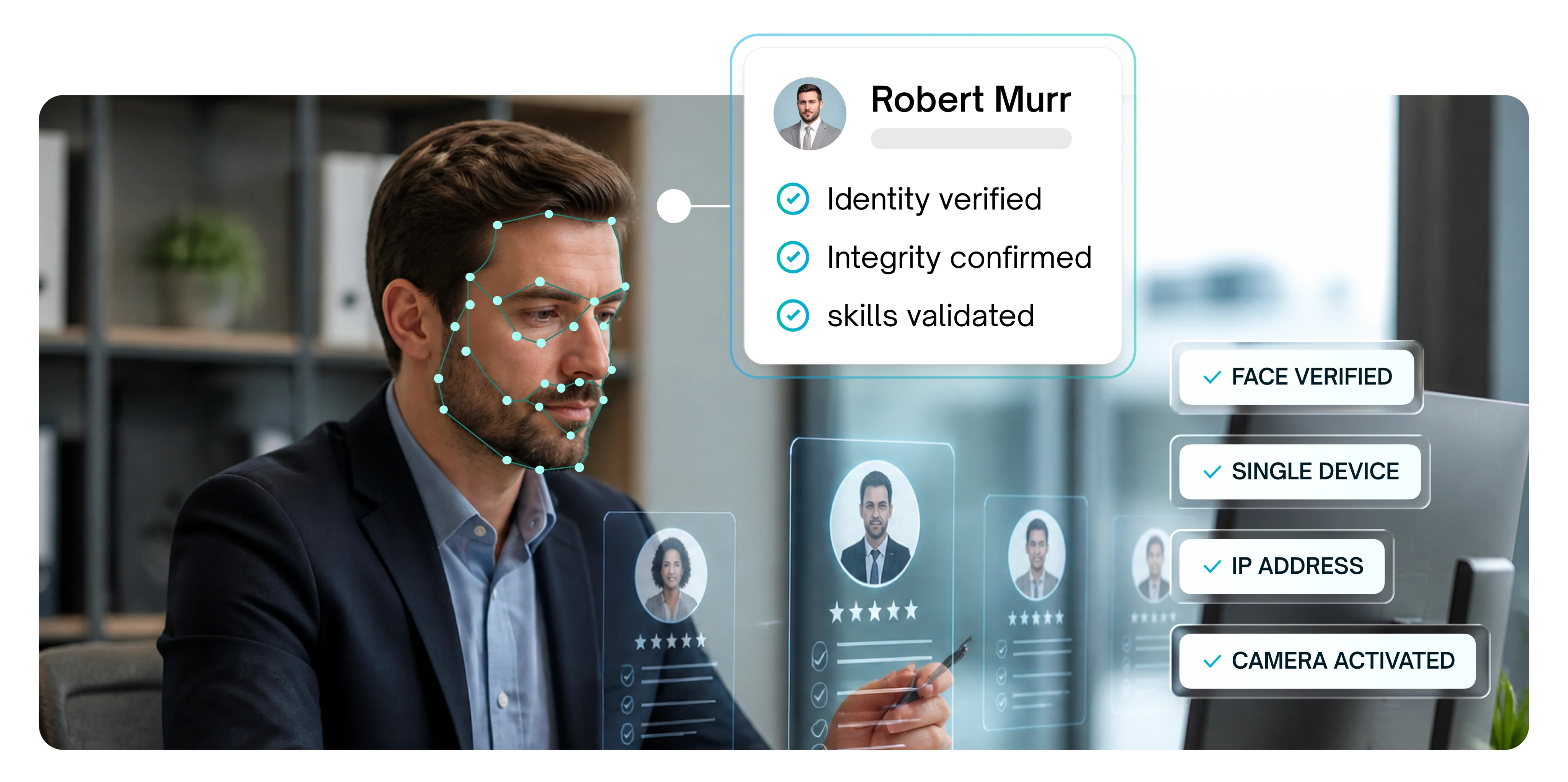
Connect the candidate to the identity presented.
Re-verify
Confirm identity at interview, offer, and Day One.
Quantify hiring-fraud exposure.
Use your own assumptions to estimate potential loss.
Estimated annual loss avoided
Equivalent to approximately 12.0 identity-fraud incidents prevented under your assumptions.
Illustrative gross estimate only. Product, implementation, investigation, and operating costs are not included.
Candidate fraud in the real world
A Fortune 500 company faced a North Korean candidate fraud operation.
Glider AI helped expose it. Candidate identity is already an enterprise hiring and security issue.
“Skills-based, identity-verified hiring shut it down.”
Make identity verification a standard hiring control.
Talk to an identity verification expertAlign Talent and Security
Know the risk. Close the gaps with ID Verify.
Protect hiring integrity before access is granted.
Assess My Risk